
In This Article
It’s always a smart move to protect something valuable, and for most drivers their vehicle is one of the biggest purchases they’ll make. The appearance of your car is constantly under attack from rock chips, road debris, UV rays, bird droppings, and the everyday wear of parking lots and car washes. So when people weigh up paint protection film, the question is always the same: is paint protection film worth it?
The honest answer for most vehicles is yes — but it depends on how you drive, how long you plan to keep the car, and how much you care about its finish and resale value. In this guide we’ll explain exactly what PPF does, what it protects against, how it compares to the alternatives, and who gets the most value from it, so you can decide whether it’s worth it for your situation.
It’s worth saying up front that PPF isn’t the cheapest way to care for your paint — it’s the most thorough. Wax is inexpensive but wears off in weeks; a quality film is a larger one-time investment that lasts up to a decade. Whether that trade is worth it comes down to how much the look and long-term value of your vehicle matter to you. For a lot of owners, paying once to avoid years of chips, touch-ups, and faded paint is an easy call.
Monster Auto Lab is XPEL’s award-winning dealer in Western Canada, with certified paint protection film installation at our Langley and Vancouver shops and over 600 five-star Google reviews.
What is paint protection film?
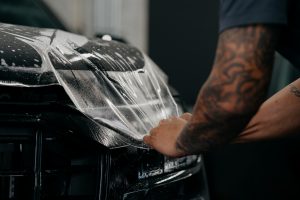
Paint protection film is a thin, clear, self-healing layer of urethane applied over your vehicle’s painted surfaces. It’s optically clear, so once installed it’s virtually invisible — your paint looks the same, just protected. Premium films are around eight mils thick and backed with an adhesive that bonds safely to factory paint and can be removed cleanly later without damage.
Unlike a product you can apply yourself, like wax, PPF must be installed by a trained professional. It goes on much like window tint, which means precision matters: an experienced installer cuts the film to your vehicle’s exact panels and wraps the edges so there’s no lifting, bubbling, or visible seams. Quality films like XPEL Ultimate Plus even self-heal, so light swirl marks and fine scratches disappear with heat from the sun or warm water.
PPF also comes in more than one finish. The most common is a clear gloss film that simply protects your existing colour, but you can also choose a satin or matte “stealth” film that turns a glossy car into a sleek matte look, or a coloured film that transforms the vehicle entirely — all while delivering the same underlying protection. The right finish depends on whether you want protection alone or a change of appearance along with it.
What PPF protects against
To judge whether PPF is worth it, it helps to know exactly what it defends your paint from:
- Rock chips and road debris. The number one reason owners get PPF. Gravel and stones thrown up at highway speed chip exposed paint — the film absorbs that impact before it reaches the surface.
- Scratches and swirl marks. From car washes, shopping carts, branches, and everyday contact. Self-healing films erase the light ones on their own.
- Stains and etching. Bird droppings, tree sap, and bug splatter are acidic and can permanently etch paint if left on. PPF resists staining and makes them easy to wipe away.
- UV fading. Over years, sunlight fades automotive paint. PPF helps shield the finish so your colour stays true and easier to match for any future repairs.
- Minor surface defects. The film even helps mask tiny imperfections already in the factory finish.
It’s also worth being realistic about what PPF won’t do. It’s built to absorb the everyday hazards above — not to survive a collision, a deep keyed gouge, or a major impact. And because the film locks in whatever is underneath, it can’t undo damage that’s already there; existing scratches should be corrected before the film goes on. Understanding those limits is part of deciding whether it’s the right investment for your car.
The real benefits of PPF
Beyond protection, PPF delivers a few benefits that owners tend to underestimate until they live with it:
It keeps your car looking newer for longer
The film maintains a smooth, glossy surface — often even glossier than factory paint. Your vehicle holds that showroom-fresh look for years instead of slowly accumulating chips and dullness.
It makes maintenance easier
A protected surface is easier to keep clean. Dirt, grime, and contaminants sit on the film instead of etching into paint, and washing becomes lower-stakes because you’re not worrying about every brush and bristle.
It’s backed by a real warranty
Professionally installed premium PPF carries manufacturer warranties of up to 10 years against yellowing, cracking, and peeling. That’s a decade of protection from a one-time investment.
It comes off cleanly
When the film has done its job, a professional can remove it without harming the paint underneath — revealing a finish that’s often in better condition than exposed panels of the same age.
It buys peace of mind
There’s a less tangible benefit owners mention constantly: they stop worrying. You don’t flinch when a gravel truck pulls in front of you, you park without hunting for the safest spot, and you actually enjoy driving the car instead of babying it. For many people, that ease is worth as much as the protection itself.
PPF vs the alternatives
Paint protection film isn’t the only way to care for your finish, but it’s the only one that physically stops impact damage. Here’s how the common options compare:
| Option | Stops Rock Chips? | Self-Healing? | Typical Lifespan | Protects Resale? |
|---|---|---|---|---|
| Bare factory paint | ✗ | ✗ | — | ✗ |
| Wax / sealant | ✗ | ✗ | Weeks to months | Minimal |
| Ceramic coating | ✗ | ✗ | 2–10 years | Helps (gloss/UV) |
| Paint protection film | ✓ | ✓ | Up to 10 years | ✓ Strongly |
Wax and ceramic coatings have their place — ceramic coating in particular adds gloss, UV resistance, and easy-clean hydrophobic properties. But neither stops a rock chip. That’s why many owners pair a ceramic coating on top of PPF: the film handles impacts, the coating handles shine and maintenance.
The takeaway from the table is simple: every option has a role, but only paint protection film actually stands between a flying rock and your paint. Wax and coatings make a car easier to clean and keep it glossy; they don’t prevent the chip in the first place. If your main concern is the cost and hassle of repairing chipped, scratched, or faded paint down the road, PPF is the only one of these that directly addresses it — which is what makes it worth the higher upfront price for so many owners.
How much does paint protection film cost?
PPF pricing depends on how much of the vehicle you cover, the film you choose, and your vehicle’s size and complexity — so the best way to get an exact figure is a quick quote. As a guide, here are Monster Auto Lab’s starting prices by package:
| Package | Starting Price | What’s Covered |
|---|---|---|
| Partial Front | $1,000 | Leading edge of hood & fenders, front bumper, side mirrors |
| Full Front | $1,750 | Full hood & fenders, front bumper, side mirrors, headlights |
| Track Package | $2,250 | Full front + lower rockers, rear wheel impact areas, partial A-pillars, fog lamps |
| Full Vehicle — Ultimate Plus | $5,000 | All exterior painted surfaces (gloss, self-healing) |
| Full Vehicle — Stealth | $5,500 | All exterior painted surfaces — satin/matte finish |
| Full Vehicle — Fusion Plus | $6,000 | All exterior painted surfaces with ceramic-infused protection |
| Full Vehicle — Colour Change | $6,500 | Full colour-change PPF |
Starting prices vary by vehicle — larger SUVs and trucks take more film and labour than a compact car. Weigh these against the cost of repeated chip repairs and repainting over the years you own the car, and PPF often pays for itself. Request a free quote for an exact price on your vehicle.
Who is PPF worth it for?
PPF delivers the most value in certain situations. It’s especially worth it if you:
- Just bought a new vehicle. Protecting a flawless factory finish from day one locks in that new-car look — the ideal time to apply film.
- Own a luxury, performance, or enthusiast car. Higher-value paint means higher repair costs and more reason to protect it.
- Drive an EV like a Tesla, Rivian, or Lucid. Many EVs have famously soft factory paint that chips easily, and they rack up highway miles between charges.
- Commute or road-trip on the highway. More high-speed miles means more exposure to gravel and debris.
- Plan to keep or resell the car. Whether you hold it for a decade or sell in a few years, an unblemished finish pays off.
If your car lives mostly in a garage and rarely sees a highway, partial coverage may be all you need. The point is to match the protection to how you actually use the vehicle.
It’s also worth knowing you don’t have to wrap the whole car to get value. Many cost-conscious owners start with the front-end panels that take the most abuse and add coverage later. The key is simply matching your investment to your risk — there’s a sensible PPF option at almost every budget.
The one group who may not need it? Drivers keeping a low-value car for a short time who aren’t concerned about its finish. For everyone else with a vehicle they care about, the question usually isn’t whether PPF is worth it, but how much coverage makes sense.
Does PPF add resale value?
This is where the “worth it” math often tips in PPF’s favour. A single deep rock chip on the hood usually can’t be polished out — fixing it properly can mean repainting a panel, which costs hundreds of dollars and introduces non-factory paint that buyers and inspections notice. Multiply that across years of driving and the cost of not protecting the car adds up quickly.
A vehicle with documented, professionally installed paint protection film and an unblemished exterior commands more at resale than an identical car with chips, swirls, and faded paint. The factory finish is exactly what buyers pay a premium for, and PPF preserves it. For owners of vehicles that already hold their value well, that protected finish is a meaningful return on a one-time investment.
So is it worth the cost? Frame it against the alternative. PPF is a one-time expense; paint damage is a recurring one. A few chips repaired here, a faded hood resprayed there, and a lower resale offer at trade-in time can quietly add up to more than the film would have cost — without ever giving you back the original factory finish. Viewed over the years you own the car, protection usually costs less than neglect.
How to decide if PPF is worth it for you
Not sure how far to go? Work through these four questions and the answer usually becomes clear:
Choosing the right installer in BC
The biggest variable in whether PPF is “worth it” is the quality of the installation. The same film can look flawless or disappointing depending on who applies it. Before you book, check that the shop uses certified, experienced installers, works with a reputable film brand, and backs the work with a manufacturer warranty. Look at photos of their actual work, read their reviews, and visit in person — a clean, organized shop reflects how much care goes into the job.
BC conditions make protection especially worthwhile here. Highway 1 gravel-truck traffic, the loose stone of the Sea-to-Sky and interior highways, and winter sand and salt all take a toll on paint. At Monster Auto Lab, we install paint protection film at our Langley and Vancouver shops using computer-cut patterns tailored to each vehicle, backed by our XPEL certification and manufacturer warranties.
Be wary of quotes that seem too good to be true. A cut-rate install often means cheaper film, no edge-wrapping, and inexperienced hands — which can lead to lifting, peeling, and trapped dirt within months. Because PPF locks onto your paint, a bad install can even make removal harder down the road. Paying a little more for a certified shop and a warrantied film is what makes the difference between protection that’s worth it and a job you regret.
How long does PPF last, and how do you care for it?
Quality paint protection film lasts up to 10 years, and keeping it performing is easy. Wait about a week after installation before the first wash so the edges fully cure. After that, hand wash with a pH-neutral soap or use touchless washing, and avoid harsh automatic brushes that can catch edges. Remove bird droppings, tree sap, and bug splatter promptly, since they’re acidic and can stain even protective film if left to bake on. Because top-tier film self-heals, light swirl marks vanish on their own with warmth from the sun. With that minimal care, the film protects your paint quietly in the background for years — which is exactly what makes it worth it.
Frequently asked questions
Is paint protection film really worth the money?
For most owners, yes. PPF prevents rock chips and scratches that would otherwise require expensive paint repair, and it preserves resale value by keeping the factory finish intact. The longer you keep the car and the more you drive it, the more it pays off.
How long does paint protection film last?
Professionally installed premium PPF is backed by warranties of up to 10 years against yellowing, cracking, and peeling. With proper care, it keeps protecting your paint for the life of most ownership periods.
Does PPF really self-heal?
Top-tier films do. Light swirl marks and fine scratches in the film disappear when exposed to heat — from the sun, warm water, or a heat gun. Deeper cuts that go through the film won’t heal, but the everyday surface marks will.
Is PPF or ceramic coating better?
They do different jobs. PPF is a physical barrier that stops chips and scratches; ceramic coating adds gloss, UV resistance, and easy-clean properties but won’t stop impact damage. The best protection often combines both — PPF underneath, ceramic coating on top.
Can paint protection film be removed?
Yes. A professional can remove PPF cleanly without damaging the paint underneath. In fact, the paint beneath the film is usually in better condition than unprotected panels of the same age.
Should I get PPF on a used car?
You can, but it’s best applied to clean, defect-free paint. On a used vehicle, a paint correction first removes existing swirls and scratches so the film locks in a restored finish rather than sealing in imperfections.
Does paint protection film turn yellow over time?
Older or low-quality films could yellow under UV exposure, but modern premium films are engineered with UV-stable, non-yellowing topcoats and are warrantied against discolouration for up to 10 years. Choosing a reputable film and a certified installer is what prevents it.
How much of my car should I cover?
It depends on how you drive. The high-impact front end — hood, fenders, bumper, and mirrors — is the most common starting point because that’s where rock chips happen. Owners who drive a lot of highway miles or want maximum protection often choose full-vehicle coverage. There’s no single right answer; it’s about matching coverage to your exposure.
See if PPF is right for your vehicle
Tell us about your car and how you drive — we’ll recommend the right coverage and give you a clear, upfront quote.
Request a free quote